
When Air Protects Production
Posted in: White Papers
Tagged in:
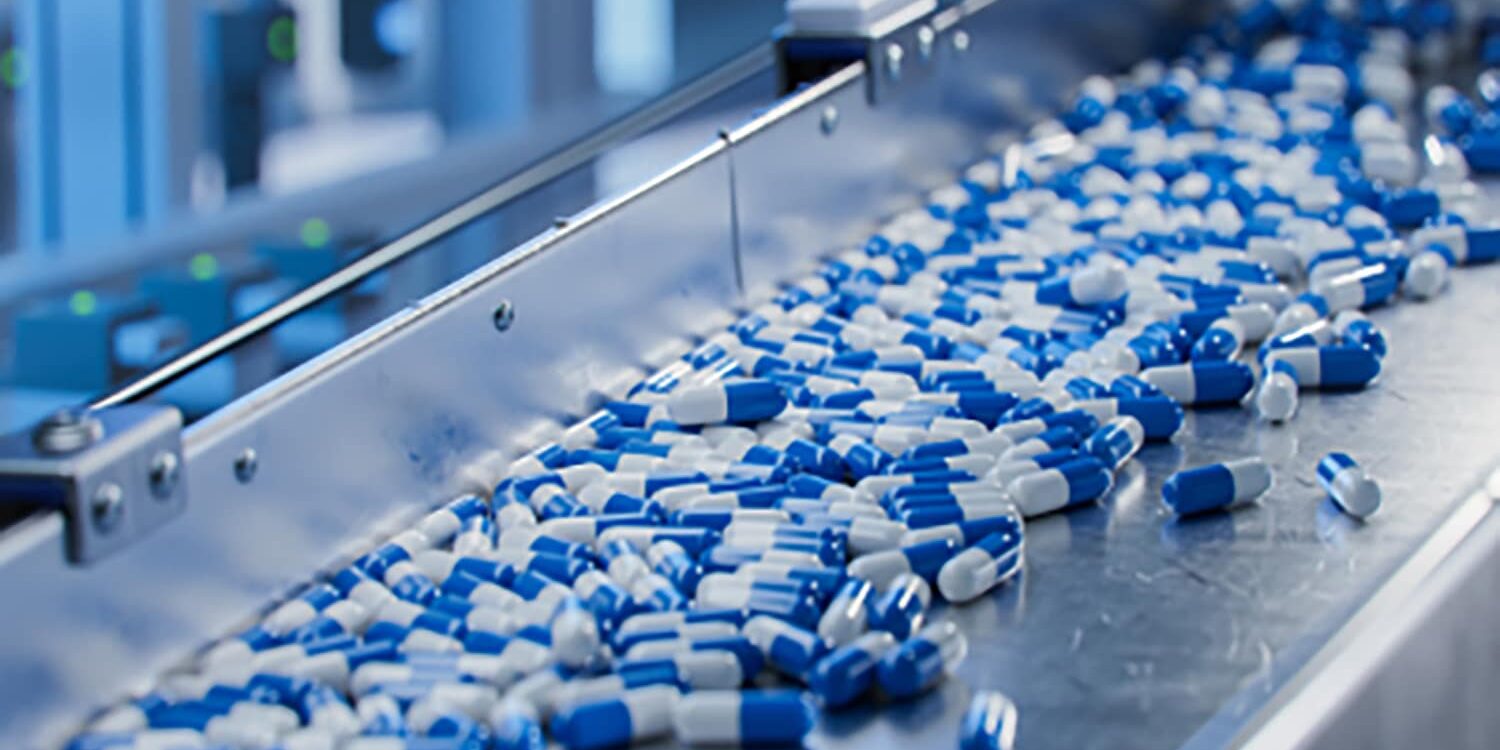
Why Life Sciences facilities must view HVAC as a business-critical asset.
The Product is the Value
Commercial building HVAC is expected to stay in the background. It conditions air, supports comfort, manages energy use and is noticeable only when it fails to operate properly.
This is especially true with Life Sciences manufacturing and research facilities, which operate under a different reality than typical commercial buildings. In Life Sciences environments, HVAC air systems help support the conditions around high-value production, sensitive processes and quality-critical spaces. The building is not the primary value driver. Instead, the product, the process and operational continuity are what the facility is designed to protect.
Therefore, instead of just air handler costs, an additional evaluation should include the desired business outcome that the air system will help protect.
Protection of the business outcome for Life Sciences owners must be based on airflow, efficiency, reliability, serviceability, environmental consistency, cleanability, filtration strategy, operating visibility and long-term confidence. The air-system solution that best supports the facility should be prioritized over the lowest initial-cost option.
Why Production Continuity Changes the HVAC Conversation
When a conventional building’s system goes down, the impact may be uncomfortable, disruptive and expensive. However, when a Life Sciences production building’s environment fails, the repercussions can be broader. Downtime may result in schedule disruption, investigation requirements, product risk, maintenance intervention and lost operating capacity.
Not every HVAC issue becomes a product-quality event. However, Life Sciences facilities operate under tighter environmental requirements, making the consequences of system disruption potentially more significant. Life Sciences facilities require tighter requirements, more specialized operating modes and demand expectations for uptime and environmental control. A system that appears less expensive at purchase can evolve into an ongoing operational cost burden
The lifecycle-cost concept is not unique to HVAC. NIST Handbook 135 describes life-cycle cost methodology for high-performance facility projects. DOE/NIST BLCC resources describe comparing alternatives that may carry higher initial cost but lower operating cost over the project life. That same logic helps explain why first cost alone can result in a poor air-system value evaluation.
Critical Features: Reliability, Serviceability, Redundancy and Consistency
Reliability is often treated as a general product attribute. Reliability in Life Sciences environments is a mandatory performance requirement connected to facility value.
A reliable system is not simply one that operates. It is a system designed for the operating modes that the facility actually needs, such as fan redundancy, unit redundancy, service access, factory-coordinated electrical or controls provisions and construction details that support cleanability and long-term maintainability.
Serviceability matters because production environments do not benefit from equipment that is difficult to inspect, clean, maintain or repair. Redundancy matters because failure modes should be considered before the facility is overburdened with them. Consistency matters because environmental control is only valuable if it can be maintained under real operating conditions.
Optimization Turns Performance Into an Operating Practice
Protection and reliability describe what the system must preserve. Optimization describes how the facility continues improving the way the system operates.
Controls integration, monitoring, trending, commissioning support and operational flexibility offer facility teams a clearer view of operating conditions and help them identify drift, troubleshoot issues and refine future performance. Optimization should not be positioned as a one-time technology feature. It is the ongoing discipline of using verified information and operating insight to support better decisions.
A Return on Air outcome not only protects production, reduces risk, increases efficiency and extends asset life, but continually improves how the system supports the facility.
| ROA outcome | Air-system design levers | Business relevance |
|---|---|---|
| Protect production continuity | Fan redundancy, unit redundancy, serviceability, coordinated electrical and controls provisions | Helps reduce exposure to avoidable interruption and supports clearer response during maintenance or failure events. |
| Reduce quality and contamination-risk exposure | Filtration strategy, sealing, cleanable construction and condensate management | Supports contamination-control expectations without implying that HVAC alone ensures quality or compliance. |
| Improve operating efficiency | Energy recovery, fan selection, pressure-drop management and lifecycle-cost analysis | Connects efficiency to operating profile, maintenance burden and total cost over time. |
| Optimize operational performance | Controls integration, monitoring, trending, commissioning support and operational flexibility | Supports visibility, troubleshooting, continuous improvement and better operating decisions. |
| Extend asset performance | Thermal integrity, leakage and deflection performance, corrosion-resistant materials and service access | Supports durability, maintainability and lifecycle value. |
Standards-based Proof Belongs in the Business Discussion
AHRI Standard 1350 gives engineers and owners a disciplined way to compare certain central station AHU casing characteristics. It covers published ratings for casing deflection, casing air leakage rate, thermal transmittance, thermal bridging and filter bypass leakage rate. Ratings are verified under defined methods and conditions.
Comparing equipment matters, because Return on Air should be documented and not rely solely on broad claims alone. Leakage, thermal transmittance, thermal bridging and filter bypass leakage are measurable or rated dimensions of casing performance. However, they still must be connected carefully to project conditions before claiming facility outcomes.
Return On Air: A Better Decision Framework
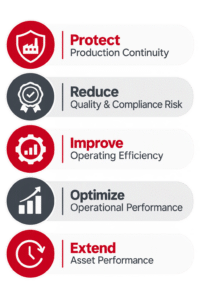 Return on Air connects air-system design to measurable facility outcomes. It does not replace engineering standards, regulatory expectations or project-specific specifications. Owners, engineers and contractors should ask these questions before equipment is selected:
- What must the system protect?
- What operating conditions must it maintain?
- What happens when one component is down?
- What maintenance burden will the facility inherit?
- What information will operators use to monitor and optimize performance?
- Which performance metrics are verified, modeled or measured?
- Which assumptions are being used to compare cost over the life of the asset?
DOE encourages a whole-building approach to energy efficiency, because laboratories are energy-intensive. This approach reinforces the need to evaluate air-system choices as part of facility performance rather than as isolated equipment purchases.
Those questions move the discussion from equipment price to facility value. Instead of just meeting the minimum specification, the more important air system consideration is whether it can support, protect and optimize the facility’s needs.
What Business Outcome Are You Trying to Protect?
Life Sciences HVAC decisions should be centered around the product, the process, the schedule, the environmental conditions and the consequences of disruption and other value at risk assessments. Then evaluations on what the air system protects, sustains and optimizes over its lifespan will deliver the real Return on Air.
Production continuity, compliance confidence, contamination control, and product integrity all depend on environmental control. Let's discuss your facility, challenges, and future investments to identify the considerations that matter most.
WRITTEN BY:
David Craig
David Craig is Business Development Manager – AHU/DX at Nortek Air Solutions. He brings more than two decades of experience in capital equipment and engineered systems sales, with a background spanning applied HVAC, Life Sciences, and engineered equipment solutions. David works with customers, engineers, contractors, and other project stakeholders to address air-handling requirements for pharmaceutical, healthcare, and other critical environments.