
Why “No Sweat” Matters in Life Sciences Facilities
Posted in: White Papers
Tagged in:
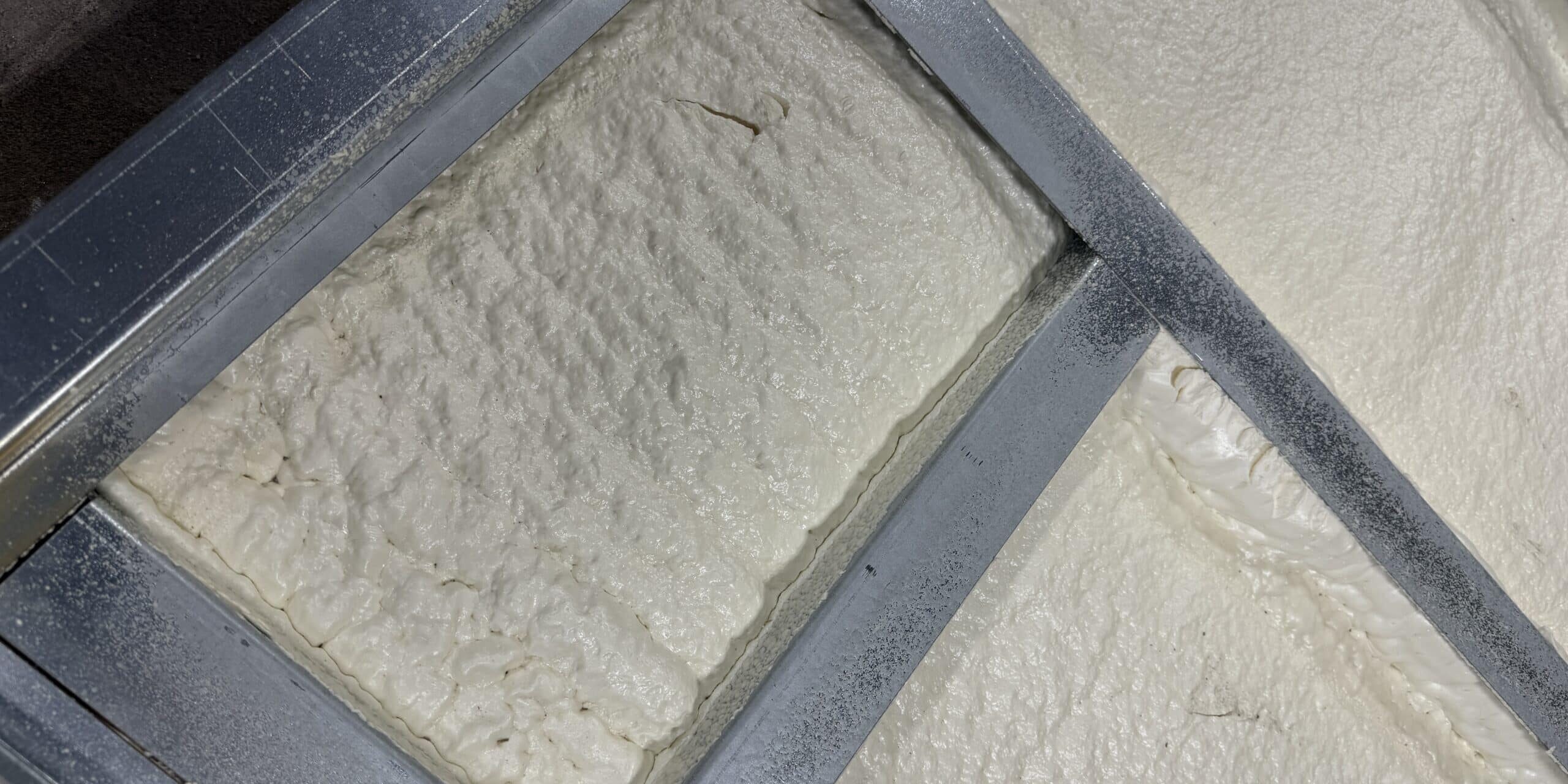
Lessons for pharmaceutical manufacturing, biotech and other moisture-sensitive Life Sciences environments.
Sweating is Not Merely Cosmetic
Air-handler sweating extends beyond an inconvenient maintenance problem in Life Sciences facilities. Unchecked condensate can accumulate on surfaces or in reservoirs and undermine a facility’s contamination-control strategy.
Visible condensation on or around an air-handling system signals that thermal performance, dew point, casing construction, operating conditions, or moisture management should be evaluated.
That’s why “no sweat” air handling matters in a regulated manufacturing environment. Simply keeping the unit’s exterior and interior looking clean falls short. Ideally, the goal is to reduce conditions that can contribute to unwanted condensation, support cleanable design and strengthen confidence in the overall environmental-control strategy.
Why Condensate Matters in Life Sciences
Condensation does not automatically signal a contamination event. However, moisture accumulation can increase contamination risk when surfaces are difficult to keep clean or dry. Drain maintenance challenges can also allow standing water to develop and, depending on system design and operating conditions, moisture may be re-entrained into airstreams serving cleanroom production areas.
Therefore, condensate management belongs in the same conversation as cleanability, drain-pan design, dew-point control, humidity control and contamination-control strategies. HVAC should be positioned as one component of a facility’s broader moisture-management and contamination-control strategy.
AHRI 1350 provides a standards-based framework because it defines and tests unit casing air leakage, thermal transmittance, thermal bridging and filter bypass leakage. Those categories do not guarantee a facility outcome, but they do help engineers compare construction approaches using defined terminology and proven testing methods.
How Condensation Occurs
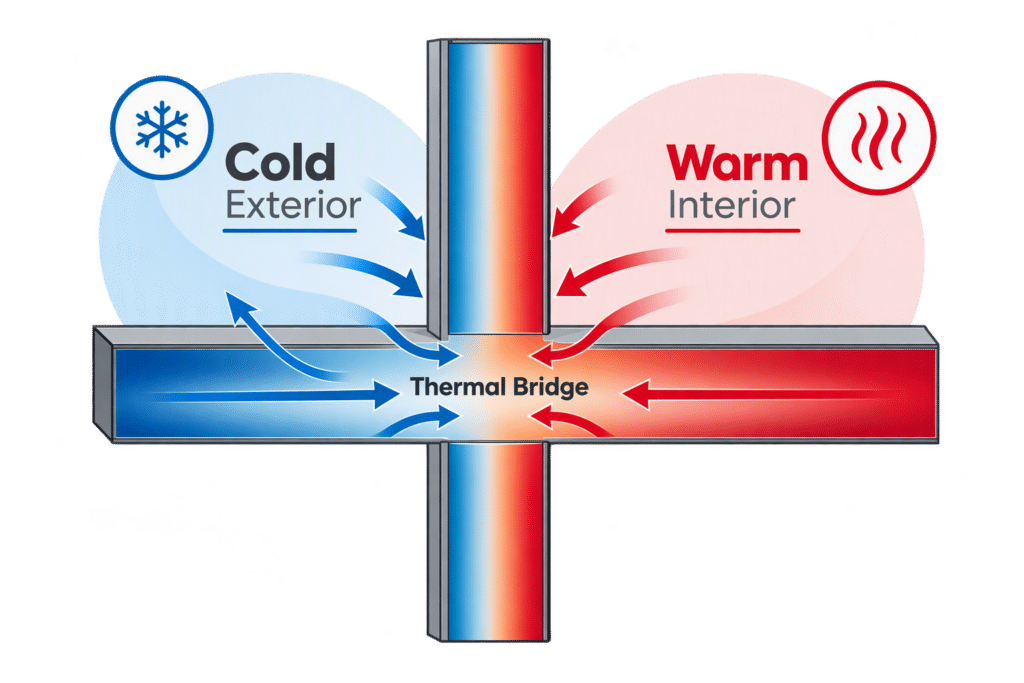
Condensation occurs when a surface temperature drops below the ambient air’s dew point. In an air-handling system, any combination of cold internal conditions, low discharge-air temperatures, humid ambient air and thermal bridges can create condensation.
Thermal bridging is especially important in Life Sciences. AHRI 1350 defines thermal bridging and thermal bridging classes as comparison tools for casing construction. The standard also cautions that these ratings cannot predict the actual condensation risk of a specific application.
That unpredictability is important in Life Sciences facilities. A casing rating can strengthen the engineering comparison, but application conditions still determine the actual risk. The leaving-air temperature, ambient temperature, humidity, dew point, mechanical-room conditions and operating schedule are all critical design parameters.
The Thermal-break Connection
Thermal breaks can help reduce heat transfer between the cold and warm sides of an air-handler panel or frame. No-through-metal construction and the Nortek Air Solutions Polyblock configuration, which features a four-inch foam-filled wall, are especially relevant where an application has low supply-air temperatures, high humidity exposure or meaningful exterior-sweating risk.
Describing a unit as having a “premium thermal break” does not, by itself, establish how its casing will perform under project conditions. Thermal integrity should be evaluated using relevant ratings, construction details and application requirements. HVAC should be positioned as one of several components in a facility’s broader moisture-management and contamination-control strategy.
AHRI 1350 supports comparison of casing construction; however, it does not predict the condensation risk of a specific installed AHU under project conditions.
Optimization Closes the Loop
A strong no-sweat strategy should not stop with unit construction. It should also consider how the facility monitors conditions that drive condensation risk over time.
Humidity, dew point, operating mode and environmental trends can change with seasons, process loads and facility use. Where controls and monitoring are available, trending those conditions can help operators identify condensation risk patterns, support troubleshooting and refine operating strategies before moisture becomes a recurring condition.
This strategy is the optimization layer of Nortek Air Solutions’ Return on Air: design for thermal integrity, then use operating visibility, commissioning and continuous improvement to sustain the intended outcome.
Return on Air Takeaway
Thermal breaks should not be evaluated as a feature line item. Instead, engineers and building owners should evaluate how thermal performance, moisture management, condensate control and operating visibility can help protect environmental stability and facility performance over the asset’s lifecycle.
In Life Sciences environments, no-sweat construction can be part of a stronger Return on Air story: supporting environmental stability, reducing moisture-related risk exposure, improving long-term facility confidence and creating a foundation for ongoing optimization.
No Sweat. Let's Talk About It.
Whether you're planning an expansion, facility upgrade, or new manufacturing operation, let's discuss the environmental-control challenges that could impact production continuity, compliance, and facility performance.
WRITTEN BY:
Eric Arabian
Eric Arabian is Director of Product Development – Engineering at Nortek Air Solutions. With a background in air-handling product development, design engineering, and engineering leadership, he brings a technical perspective to how air systems can support reliable performance in demanding applications. He holds a bachelor’s degree in mechanical engineering from Concordia University.